
You are using an out of date browser. It may not display this or other websites correctly.
You should upgrade or use an alternative browser.
You should upgrade or use an alternative browser.
Reform, and the death of the Tory Party
- Thread starter briantrumpet
- Start date
Page may contain affiliate links. Please see terms for details.

Pross
Guru
Saw a Facebook post by a local Reform Councillor saying how he'd attended a meeting (I nearly fell off my chair that he actually did some work!) about flooding in the local area with photos of an example. It was a local municipal golf course that is part of parkland built in the flood plain of the river when the town was built in the 1960s. The reason it is a park and leisure area in the town is down to it being an area that needs to flood. Obviously his Facebook followers are frothing at the mouth about how the Government needs to be doing something about it as it floods all the time (apparently the easy solution is to deepen the river and clear culverts and drains, they don't appear to understand hydrology).
I think this is the same Councillor that flounced from a meeting as they didn't have a minute's silence for Charlie Kirk (and which was definitely not because he was calling into the meeting from the side of a pool in his trunks).
I think this is the same Councillor that flounced from a meeting as they didn't have a minute's silence for Charlie Kirk (and which was definitely not because he was calling into the meeting from the side of a pool in his trunks).
Pross
Guru
I've provided my response pointing out the irony of the representative of a Party that wants to get rid of net zero, reopen mines and accelerate the use of fossil fuels is complaining about flooding (and also that using a flooded floodplain in the neighbouring ward is a strange choice for highlighting the problem of flooding in his ward which is the other side of the river).

C R
Squire
I've provided my response pointing out the irony of the representative of a Party that wants to get rid of net zero, reopen mines and accelerate the use of fossil fuels is complaining about flooding (and also that using a flooded floodplain in the neighbouring ward is a strange choice for highlighting the problem of flooding in his ward which is the other side of the river).
Do you think they have enough introspection to feel chastised?
Pross
Guru
Do you think they have enough introspection to feel chastised?
Of course not, he's a Reform councillor. Posturing and making populist comments is his limit.

icowden
Pharaoh
Another wonderful profile for the New Yorker:
https://mrhenrymorris.substack.com/p/nigel-farage-canterbury-pilgrim
https://mrhenrymorris.substack.com/p/nigel-farage-canterbury-pilgrim

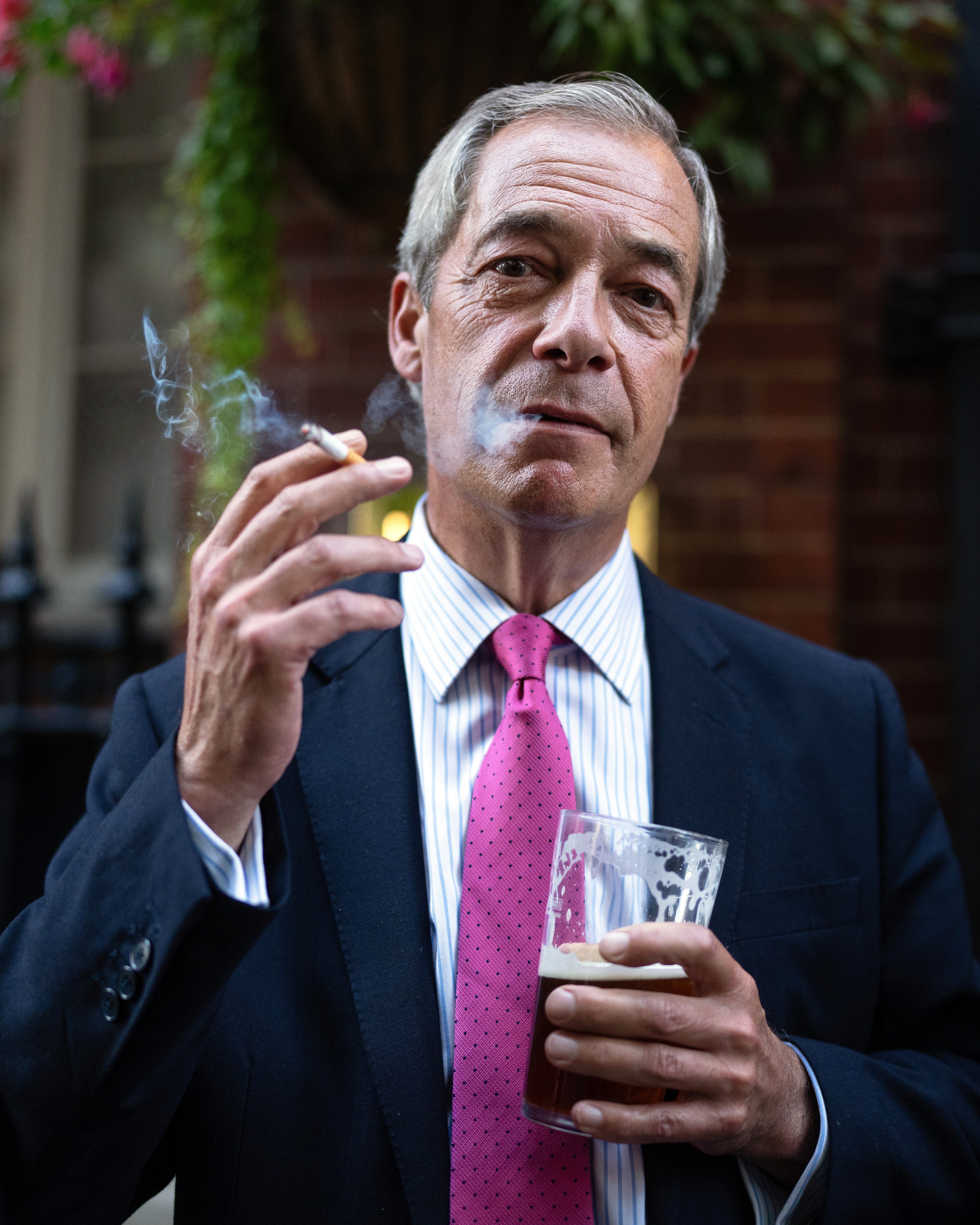
Nigel Farage does not walk onto Broadstairs Pier; he arrives. Like the pint of bitter in his nicotine-stained hand, the man beside me sloshes over the rim with residual indignation.
Standing in exhilarating proximity to the North Sea, he tells me that from this vantage point we can spot “gannets, seals, and on a good day” – the glowing Rothmans he’s just flicked arcs like a flare across the sky – “illegals.”
Farage is neither handsome (he would not escape the filter of a dating app that eliminates the profiles of moderate alcoholics) nor stylish (the beige blazer and loudly patterned tie speak rococo golf club treasurer). He is, however, irrepressible.
Born in 1964, in Farnborough, where every second man is a test pilot, and every third is in overalls carrying a slide rule, he grows up beside the airfield perimeter fence, pressing his face to the wire while Lightnings do vertical climbs. It’s all straight out of The Eagle, and the exact moment when Britain still believes it can do anything, just so long as it keeps the kettle boiling.
He is educated at Dulwich College where he learns three lasting skills: bullying, evading media scrutiny, and math. On the day we meet, his time there is under the sort of media scrutiny that used to be reserved for the policies of far-right political parties. He has no time for accusations that he used to goosestep around the junior playground singling out nine-year-olds to tell them to go back to Africa. “No, I never goosestepped. My hamstrings are too short.”
Nor does he react well when I put to him that he might have made the hissing sound of gas next to Jewish pupils. “Oh here we go, it’s The New Yorker! I knew it wouldn’t take long for your woke globalist agenda to rear its head. It was just hissing. What’s that supposed to be an example of?”
“Onomatopoeia?” I reply, reflexively.
“No,” he snarls. “This is Broadstairs Pier.”
After a brief and patriotic stint in the City – where he trades metals and, later, metaphors about sovereignty – he becomes a ferocious critic of faceless banana-straightening European bureaucrats. His political philosophy is simple: Britain is a once-proud nation reduced to a theme park run by Belgians. His solution is equally straightforward: leave immediately. To expedite this, in 1999 he enters the European Parliament and spends the next twenty-one years denouncing it as an autocratic superstate while carefully claiming every available travel allowance. It is the longest running act of performance art that Brussels has ever subsidised.
He calls it Brexit and it is his masterpiece. An analogy to À La Recherche Du Temps Perdu comes to mind. For it is impossible to ignore the similarities between Nigel Farage and Marcel Proust. Both men devote their entire adult lives to a near-erotic obsession: the recovery of a golden age that turns out to have been largely imagined. And yet, while Proust needed seven volumes to recapture the taste of a madeleine dipped in lime-blossom tea, over a Toby Carvery breakfast beside the A127 Nigel Farage can evoke an entire nation’s nostalgia for blue passports, imperial measures, and the sound of Vera Lynn competing with a car alarm that’s been going off since 1994.
Farage openly acknowledges that Brexit was an excursion into deconstructing the robust figurative tradition in which he has so definitively inserted himself. “I wanted to stop fantasising about 1950s rationing and make it a reality” he tells me.
His devotees, radicalised Tim Henman fans who refer to the 2016 referendum as “our Normandy,” follow him wherever he goes. It is why he has founded, co-founded, or led no fewer than three political parties (UKIP, the Brexit Party, and now Reform UK), each essentially the same Panzer but with a louder exhaust.
In the eyes of most Americans, Farage looks an unlikely figure to be the focus of a cult.
His Fargo Cult is named after the cargo cults of World War Two, where Pacific islanders observed Western powers receiving vast amounts of manufactured goods via airplane and began building mock airstrips in the hope of summoning their own “cargo” from the sky. Fargo Cult devotees are likewise unable to fathom the complex logistics of supply chains, and so build vast mock lorry parks in Kentish countryside in the hope of summoning commerce from non-existent trading partners.
“I need to show you something” he says.
We walk to the spot where the old lido used to be. Today it’s just concrete, weeds, empty Polish lager cans, and memories of the summer of ’76. “This was England once,” he says, his voice now low, as if the town itself were an ex-wife who’d let herself go but to whom he still owes maintenance money.
He lights another Rothmans and glowers at the wind farm on the horizon. Its turbines shuttling kilowatts to the Grid like alms to the unworthy, as if the blades which slice the sky into portions of renewable redemption had personally betrayed him.
“Net Zero is an internationalist plot designed to make us poorer, not richer,” he declares.
I point out that Reform UK get 90% of its donations from climate science deniers, so this isn’t strictly accurate. He sucks on his cigarette as if an Arab petrostate’s future depends on it. As the toxic smoke meets the damp Kent air in his lungs, it erupts in a cough reminiscent of the death rattle of an entire postwar consensus. For one precious moment, the turbines’ frictionless future and Farage’s bronchial past occupy the same frame. The wind, indifferent to both, carries the Thanet Offshore Wind Farm’s electrons to shore and Farage’s particulates out to sea.
Nigel Farage is a Chaucerian figure – a Canterbury pilgrim on a spiritual journey to defend our right to call foreigners ‘foreigners’ without first filling in a form. Like The Pardoner, he is a man of contradictions, a hypocritical official who exploits the poor while preaching against the very avarice he embodies. The Pardoner did this with fake relics and fraudulent promises of salvation; Farage does it with pints of champagne and promises of sovereignty. Blurring the boundaries between conviction and performance, he challenges us to wonder whether he is on a crusade for the country, for himself, or for Vladimir Putin. The Latin root for pilgrim, after all, is ‘stranger.’
He gets an alert on his phone telling him he needs to record a Cameo for a hen-do from Bath. In this moment, I realise that the man wheezing in the drizzle next to me is Chaucer himself – master of narrative, presiding over the raucous tavern of national myth, author of his very own Canterbury Tailbacks.
History will decide whether Nigel Farage was the tribune of a silenced majority or the loudest drunk in a decaying pub. In the meantime, he remains what he has always been: the man who turned a pint into a movement.

Last edited:

Pinno718
Squire
Good piece @icowden
Sad about the New Yorker's 'imminent demise'. It's the sort of classy journalism thar is becoming rare.
Fagash: “Oh here we go, it’s The New Yorker! I knew it wouldn’t take long for your woke globalist agenda to rear its head. It was just hissing. What’s that supposed to be an example of?”
My word there's a lot on those few sentences.
For the tl;dr brigade with their Tik Tok levels of attention, try it.
To expedite this, in 1999 he enters the European Parliament and spends the next twenty-one years denouncing it as an autocratic superstate while carefully claiming every available travel allowance. It is the longest running act of performance art that Brussels has ever subsidised.
Sad about the New Yorker's 'imminent demise'. It's the sort of classy journalism thar is becoming rare.
Fagash: “Oh here we go, it’s The New Yorker! I knew it wouldn’t take long for your woke globalist agenda to rear its head. It was just hissing. What’s that supposed to be an example of?”
My word there's a lot on those few sentences.
For the tl;dr brigade with their Tik Tok levels of attention, try it.
To expedite this, in 1999 he enters the European Parliament and spends the next twenty-one years denouncing it as an autocratic superstate while carefully claiming every available travel allowance. It is the longest running act of performance art that Brussels has ever subsidised.
Last edited:

Bromptonaut
Rohan Man
- Location
- Bugbrooke, Northants
Another wonderful profile for the New Yorker:
https://mrhenrymorris.substack.com/p/nigel-farage-canterbury-pilgrim
Glaring error about Farnborough. Fagash was born at the one in Kent; Bromleyish.
The air display place is in Hampshire.

Pblakeney
Shaman
Glaring error about Farnborough. Fagash was born at the one in Kent; Bromleyish.
The air display place is in Hampshire.
The UK can be a very confusing place.
There are also Farnboroughs in Warwickshire and West Berkshire.

matticus
Legendary Member
The UK can be a very confusing place.
There are also Farnboroughs in Warwickshire and West Berkshire.
... and it doesn't help that Kent Farnborough is right next to London Biggin Hill airport (which I think also sometimes has displays ... not sure ...)

Beebo
Legendary Member
Glaring error about Farnborough. Fagash was born at the one in Kent; Bromleyish.
The air display place is in Hampshire.
I presume a $5billion law suit will be imminent for such lax journalism
Pross
Guru
The UK can be a very confusing place.
There are also Farnboroughs in Warwickshire and West Berkshire.
Would be much more appropriate if he was from the West Berkshire version.
Pblakeney
Shaman
Would be much more appropriate if he was from the West Berkshire version.
I did wonder how I could use that.
He wasn't worth the effort. 😉
Similar threads

- Replies
- 9
